One Old Letter, A Thousand Memories: The Story Hidden in Its Words
An old handwritten letter may look like nothing more than faded paper, but inside those carefully written words can live a person's memories, emotions, hopes, relationships, and a small piece of the past.
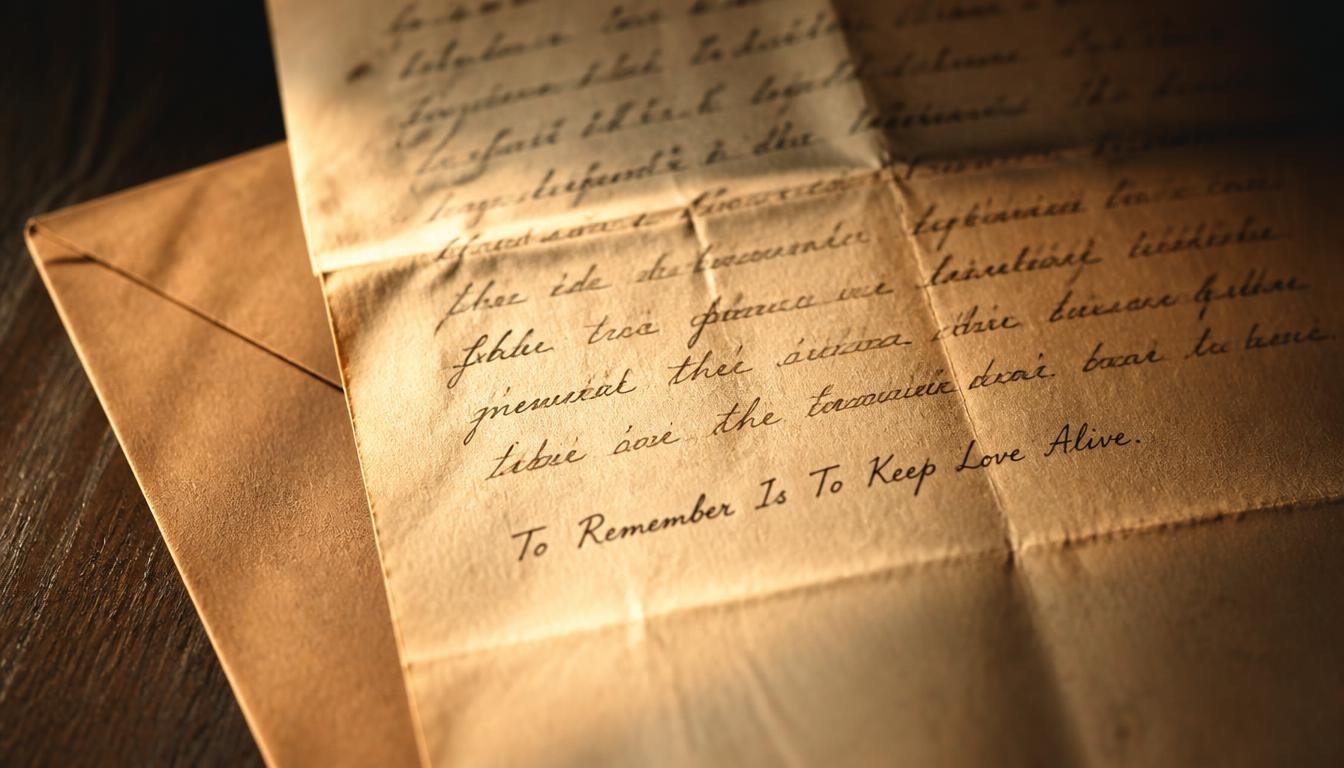
There is something strangely powerful about finding an old letter tucked inside a drawer, forgotten book, wooden box, suitcase, or family album.
The paper may be yellowed. The edges may be folded. The ink may have faded. Some words may even be difficult to read.
Yet the moment you open it, something changes.
You are no longer simply looking at an old piece of paper. You are looking at a moment that survived.
A voice from another time.
A few sentences written by someone who may have been gone for years, but whose handwriting can suddenly make them feel close again.
That is the quiet magic of old letter memories.
The Moment an Old Letter Comes Back to Life
Imagine cleaning an old family cupboard. You move a few books aside and discover a small envelope.
The name on it looks familiar.
Perhaps it belongs to your grandfather. Perhaps it was written by a childhood friend. Maybe it was sent by someone who lived in another city many decades ago.
You carefully open it.
The handwriting is different from anything you see on your phone today. The letters are uneven. Some words are darker because the writer pressed harder with the pen.
There may be corrections, crossed-out sentences, or small marks around certain words.
Suddenly, the letter becomes more than an object.
It becomes evidence of a life.
You begin wondering:
- Who was this person when they wrote it?
- Where were they sitting?
- What were they thinking?
- Why did they choose these particular words?
- What did they hope the person receiving the letter would feel?
That is why old letters can be so fascinating. They give us a tiny window into a world we can no longer physically visit.
Why Old Letters Feel Different From Digital Messages
Modern communication is fast. You type, you send, and the message arrives almost instantly.
If you make a mistake, you can delete it. If you change your mind, you can edit your words. If the conversation becomes old, it can disappear beneath thousands of newer messages.
A handwritten letter is different.
The person had time to think. The writing itself required effort. The paper had to be chosen. The words had to be written by hand. The envelope had to be addressed.
A stamp had to be attached. Then the letter entered a journey.
Perhaps it traveled across a neighborhood. Perhaps across a country. Perhaps across the world.
Every step added meaning to it.
“The paper ages, the ink fades, but the memory can remain.”
The quiet power of handwritten memoriesThe Handwriting Is Part of the Memory
One of the most interesting things about an old letter is the handwriting.
You may recognize someone's handwriting before you even read their name. A particular curve. A strange way of writing a certain letter. A line that rises toward the end. A word written larger than the others.
These details can make a person feel surprisingly present.
Digital text gives us words.
Handwriting gives us words plus personality.
Even when the writer is no longer around, their handwriting can preserve a small part of their individuality.
That is why people often keep old handwritten notes, birthday cards, postcards, and letters for decades.
They are not simply preserving information. They are preserving someone's physical expression.
What Can an Old Letter Reveal About the Past?
An old letter can tell us much more than the obvious message written inside it. Sometimes the smallest details become the most interesting.
1. Everyday Life
A letter might mention ordinary things such as what someone ate, where they worked, how they traveled, what the weather was like, who visited the house, what they were reading, or what they were worried about.
These details may seem unimportant when written. Years later, however, they can become fascinating clues about everyday life.
2. Family Relationships
Old family letters can reveal relationships that are difficult to understand from photographs alone.
A short sentence such as “Tell everyone at home that I miss them.” may suddenly reveal how connected a family once was.
Another letter might contain a birthday wish, an apology, a thank-you message, or advice from an older relative.
These small expressions can become precious family memories.
3. Personal Dreams
Letters can reveal what people hoped their future would look like.
- A dream job
- A planned journey
- Marriage
- Education
- Starting a business
- Moving to another city
- Building a better life
Reading those hopes decades later can be surprisingly moving. Some dreams may have happened. Others may not have. But the letter preserves the moment when those possibilities were still open.
The Emotional Power of Words Written Long Ago
There is a unique experience in reading words that were written before you were born.
You are reading something created by a person who lived in a different period, with different technology, different habits, and perhaps a completely different understanding of the world.
Yet emotions remain recognizable.
Love still sounds like love. Missing someone still sounds like missing someone. Hope still sounds like hope. Fear still sounds like fear.
That is one reason old letters can connect generations.
Technology changes. Language changes. Daily life changes. But human emotions often remain surprisingly familiar.
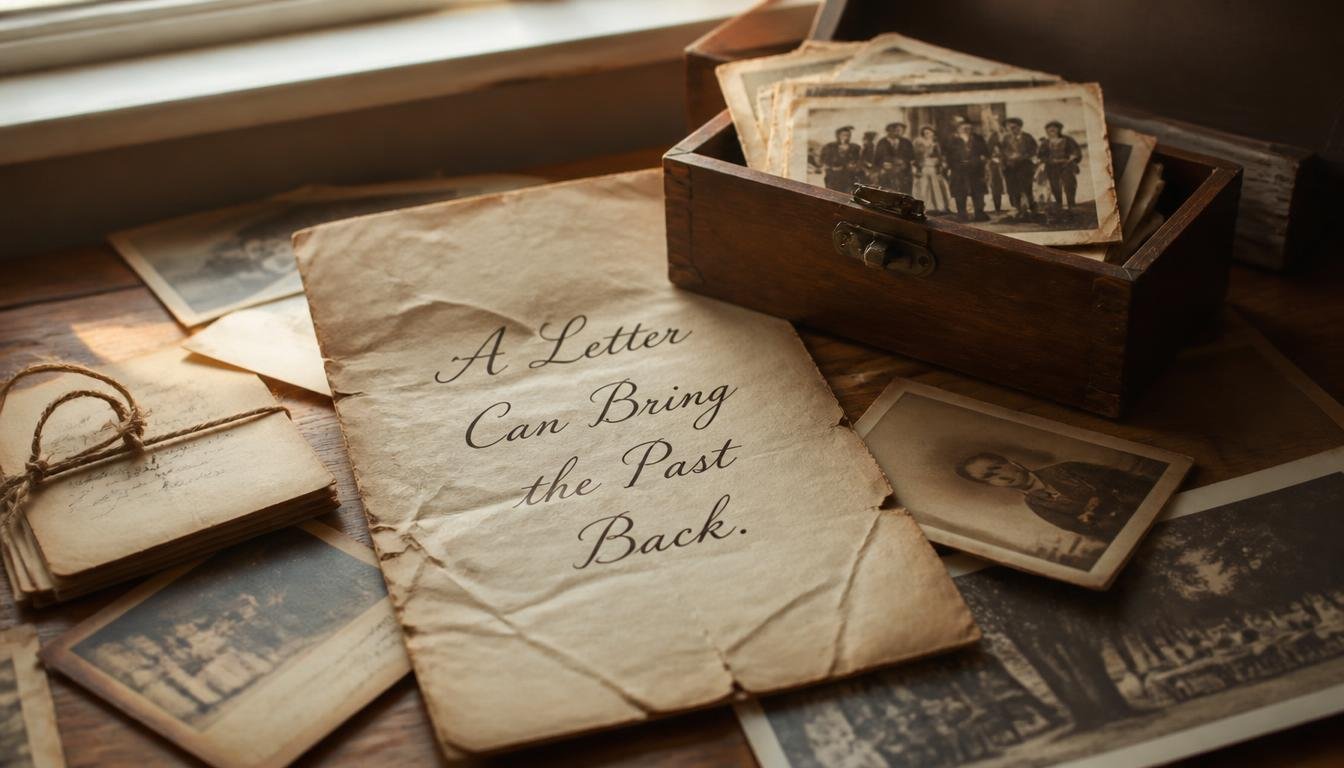
Sometimes the Most Ordinary Letter Becomes the Most Valuable
Not every old letter contains a dramatic story. In fact, some of the most meaningful letters are incredibly ordinary.
A parent asking whether their child arrived safely. A friend describing a rainy afternoon. A brother sending birthday wishes. A husband writing to his wife while away for work. A student writing home about school.
At the time, these messages may have seemed completely normal.
Nobody knew that decades later someone would read them and think:
“This is what their life was really like.”
That is the unexpected value of ordinary memories.
Something doesn't have to be expensive to be precious.
Old Letters as Family Time Capsules
A family photograph captures a moment visually. An old letter can capture a moment emotionally.
It may contain the concerns, hopes, humor, relationships, and everyday experiences of someone from another generation.
Imagine a child discovering a letter written by a great-grandparent. The child may never have met that person.
But through the letter, they can learn:
- What did they sound like?
- What did they care about?
- Who did they love?
- What did they dream about?
- What did they worry about?
Suddenly, family history becomes personal.
It is no longer just a collection of names and dates. It becomes a story.
Why People Still Treasure Handwritten Letters
In an age of instant communication, handwritten letters have become less common. That rarity can make them feel even more meaningful.
A digital message can be copied endlessly. A handwritten letter is usually unique.
There may be only one original.
The paper itself has a history. Perhaps it traveled hundreds of miles. Perhaps someone held it while reading. Perhaps it remained inside a drawer for thirty years.
Every crease and mark can become part of its story.
This physical connection is something digital communication cannot reproduce in exactly the same way.
What If You Find an Old Letter in Your Home?
If you discover an old letter, don't immediately throw it away. Take a moment to examine it carefully.
Step 1: Handle It Gently
Old paper can become fragile. Avoid pulling apart folded sections aggressively. If the paper is brittle, handle it carefully and support it from underneath.
Step 2: Check the Envelope
The envelope may contain important information.
- Names
- Dates
- Addresses
- Postmarks
- Stamps
- Return addresses
These details can help establish when and where the letter came from.
Step 3: Look for a Date
A date can completely change how you understand a letter. Even an approximate year can provide valuable context.
Step 4: Identify the Writer
If you don't recognize the handwriting, look for clues in the signature, envelope, or references inside the letter. Family members may also recognize the handwriting.
Step 5: Don't Immediately Alter It
Avoid writing directly on the original letter. Do not use ordinary tape to repair fragile paper. If the letter is particularly valuable or fragile, consider consulting a professional paper conservator.
How to Preserve Old Letters for Future Generations
Finding an old letter is only the beginning. If it matters to your family, preservation becomes important.
Keep Letters Away From Moisture
Humidity can damage paper over time. Store important letters somewhere cool, dry, and stable. Avoid damp areas and places exposed to frequent temperature changes.
Avoid Direct Sunlight
Sunlight can fade ink and weaken paper. Keep old letters away from prolonged direct sunlight.
Use Acid-Free Storage Materials
For particularly meaningful family documents, archival-quality, acid-free folders or sleeves can provide better long-term protection than ordinary paper products.
Digitize Important Letters
Creating a digital copy can provide an additional layer of protection. You can scan the letter at good resolution and save backup copies in more than one secure location.
However, a digital copy should be treated as a backup rather than a replacement for the original.
The Story Behind the Ink
One fascinating thing about an old letter is that the words are only part of the story.
Consider the ink.
Why is one sentence darker? Maybe the writer paused. Maybe they pressed the pen harder. Perhaps they were emotional. Maybe the pen was running out of ink.
Look at the spacing.
Why does one paragraph have large gaps? Perhaps the writer was thinking about what to say next.
Look at the folds.
Was the letter folded repeatedly? Did someone carry it in a pocket? Was it stored inside an envelope for decades?
These details can turn a simple piece of paper into a personal mystery.
Old Letters Can Teach Us About History
Old letters aren't only emotionally valuable. They can also provide insight into the past.
Personal correspondence can help us understand how ordinary people experienced different periods of history.
Official records often focus on governments, institutions, major events, and statistics.
Personal letters can reveal something different:
How did ordinary people experience their everyday lives?
What were their concerns? What did they discuss with family members? How did major events affect their routines?
These personal perspectives can make history feel much more human.
A Letter Can Connect Two Generations
One of the most beautiful things about preserving old letters is the possibility of sharing them with younger family members.
A teenager may not immediately be interested in an old piece of paper. But when someone explains who wrote it and why it mattered, the story can change everything.
Instead of seeing an old letter as something from the past, they may begin to see it as a message from a real person.
That can encourage conversations about family history.
Grandparents can explain stories. Parents can share memories. Children can ask questions.
Suddenly one old letter becomes the beginning of a family conversation.
Why We Shouldn't Throw Away Every Old Letter
Modern homes often contain fewer physical memories than previous generations. Photographs are increasingly stored digitally. Messages live inside apps.
Important conversations can disappear when accounts or devices change.
Old letters are different.
They are physical evidence that a particular relationship, moment, or conversation existed.
Of course, not every piece of old paper needs to be preserved forever. But letters connected to important people, family events, historical moments, or meaningful memories may deserve a second look before being discarded.
You may not know their value until years later.
The Beauty of Imperfect Letters
Perhaps the most beautiful thing about old letters is that they are rarely perfect.
- There may be spelling mistakes.
- Ink stains may appear.
- Handwriting may be uneven.
- Words may be crossed out.
- There may be fold marks.
- The edges may be torn.
- Some sentences may have faded.
And that's exactly what makes them special.
Modern communication often looks polished. Old letters look human.
Their imperfections show that a real person sat somewhere and created those words with their own hands.
What If the Letter Is Difficult to Read?
Don't give up immediately. Older handwriting can be difficult, especially when the writer used cursive.
Try reading the sentence around an unclear word. The context often provides clues.
Compare repeated letters elsewhere on the page.
If necessary, scan or photograph the letter and enlarge the image for personal study.
For historically important documents, professional transcription may also be useful.
Most importantly, avoid writing over unclear words on the original document. Preserve the original exactly as it is whenever possible.
Should You Share an Old Letter Online?
Sometimes people discover an emotional family letter and want to share it on social media.
Before doing so, think carefully.
A letter may contain:
- Private family information
- Personal addresses
- Phone numbers
- Sensitive relationships
- Names of living people
- Information the writer never intended to make public
If you decide to share it, consider removing private information and asking relevant family members first.
The emotional value of a letter does not automatically make every part of it public.
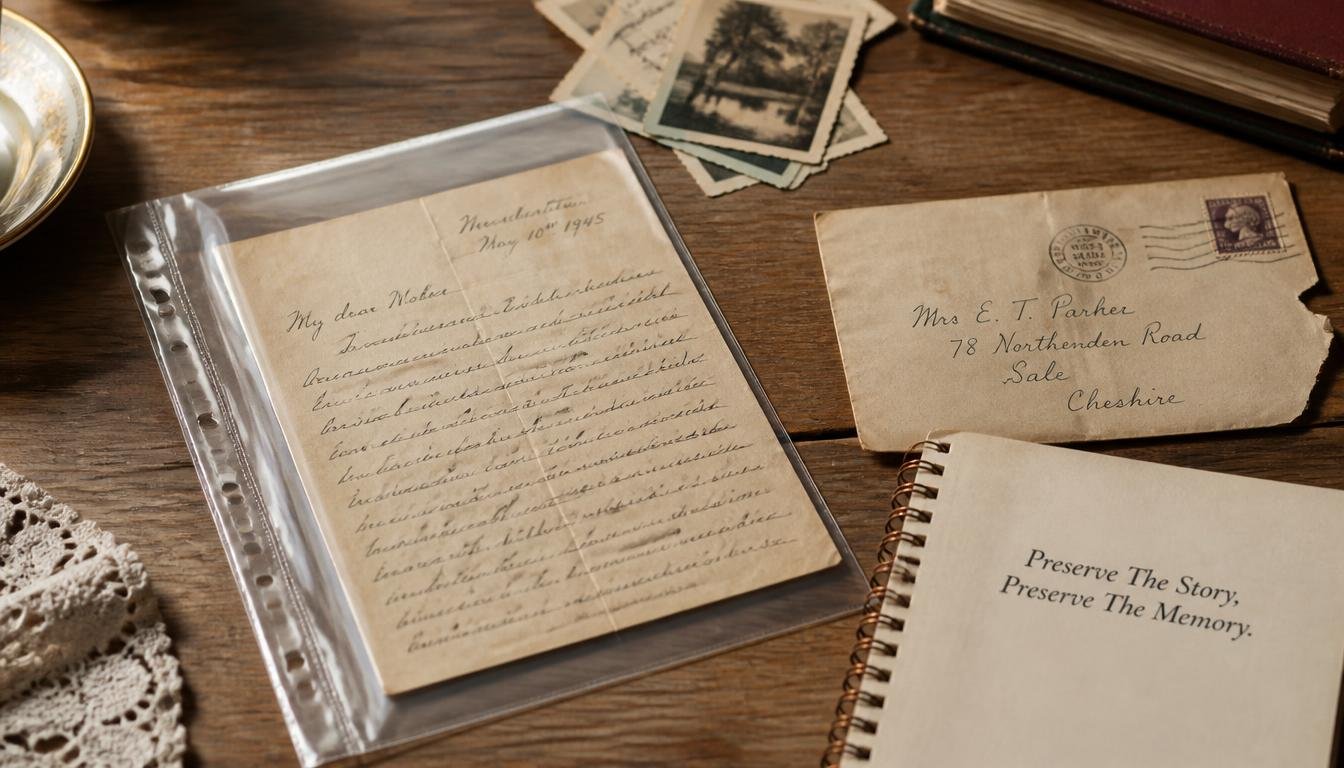
Turning an Old Letter Into a Family Story
An old letter can become the starting point for documenting family history.
You could create a simple record containing:
The Writer
Who wrote the letter? Was the writer a parent, grandparent, friend, relative, or someone else?
The Recipient
Who received it? Understanding the relationship between the writer and recipient can add important emotional context.
The Date
When was it written? Even an approximate year can help place the letter within a particular period of family history.
The Location
Where was the writer living when the letter was created?
The Story
What was happening at the time? Was the writer traveling, studying, working, celebrating something, or simply staying in touch?
The Family Connection
How are the writer and recipient connected to today's family?
The Preservation
Where is the original stored today?
This turns a single letter into a small piece of family history that future generations can understand.
The Letter You Almost Throw Away
Sometimes the most valuable memories are hidden inside things we almost ignore.
- An old envelope
- A faded postcard
- A handwritten birthday card
- A note tucked inside a book
- A letter stored in an old suitcase
- A document hidden inside a family box
We often judge objects by their appearance.
Old paper may look worthless.
But memories don't always have a price tag.
A letter may have little financial value while having enormous emotional value to a family.
That distinction matters.
Something doesn't have to be expensive to be precious.
In a World of Instant Messages, Waiting Has Meaning
Perhaps the biggest difference between old letters and modern messages is waiting.
A person wrote a letter without knowing exactly when it would be read. They had to trust the journey.
The recipient waited.
That waiting created anticipation.
Today, we are used to immediate responses. A message can travel across the world in seconds.
But old letters remind us of a slower form of communication—one where words had time to travel and emotions had time to grow.
That doesn't necessarily make the past better or the present worse. It simply makes the experience different.
And that difference is part of what makes old letters fascinating.
One Old Letter Can Tell More Than a Photograph
A photograph can show you someone's face.
A letter can show you their thoughts.
A photograph may tell you where someone stood.
A letter can tell you what they hoped for.
A photograph captures appearance.
A letter can capture personality.
Together, they can create a much richer picture of the past.
That is why families who discover old letters often find themselves looking at old photographs differently afterward.
The people in the photographs suddenly have voices.
The Words We Leave Behind
Every generation leaves something behind.
Some leave photographs. Some leave diaries. Some leave books. Some leave recipes. Some leave letters.
A letter may survive long after the writer imagined.
Someone decades later may unfold the same paper and read the same words.
That is a remarkable form of connection.
The writer may never have imagined that a stranger—or a future family member—would one day read those sentences.
Yet there they are.
Waiting.
How to Start Your Own Letter Memory Collection
You don't need a huge archive. Start with what already exists in your home.
- Old family boxes
- Books
- Albums
- Drawers
- Desks
- Suitcases
- Trunks
- Storage folders
Ask older family members if they have letters they would like to preserve. Record the stories behind them.
Digitize important documents and store originals safely.
And most importantly, write down the context.
A letter without context may become mysterious. A letter with its story becomes family history.
Don't Wait Until the Story Is Forgotten
One of the biggest lessons old letters can teach us is that memories need context.
If you have an old letter and still know who wrote it, ask questions now.
- Who was this person?
- Why did they write it?
- Where did they live?
- What was happening at the time?
- Who received it?
- Why was it saved?
The answers may disappear with time.
The letter may remain, but the story behind it can be lost.
So preserving the story is just as important as preserving the paper.
Final Thoughts: A Letter Is More Than Paper
An old letter may look like a fragile piece of paper. But inside it can live a person's voice, personality, hopes, fears, relationships, and memories.
That is why old letter memories continue to fascinate us.
In a world where communication has become faster, shorter, and increasingly digital, handwritten letters remind us that words can have a physical history.
A letter was once written by someone who cared enough to sit down and put their thoughts on paper.
It traveled. It waited. It was opened. It was read. And somehow, it survived.
Years later, someone else can unfold it and experience a tiny part of that moment.
Perhaps that is the real magic of an old letter.
The paper ages, the ink fades, but the memory can remain.
So the next time you discover an old envelope hidden inside a drawer or family box, don't be too quick to throw it away.
Open it carefully. Read the words. Look at the handwriting. Notice the date. Think about the person who wrote it.
Because you may not simply be holding an old letter.
You may be holding a small piece of someone's life.
Frequently Asked Questions About Old Letters
What makes old letters so special?
Old letters preserve more than written information. They can contain handwriting, personal expressions, dates, family stories, and details about everyday life that may no longer exist.
How should I preserve old handwritten letters?
Keep them in a cool, dry environment away from direct sunlight and moisture. For important documents, acid-free archival storage materials can provide additional protection.
Should old letters be digitized?
Yes. Digitizing important letters can create a backup and make them easier to share with family members. The original should still be preserved carefully.
Can old letters have historical value?
Yes. Personal letters can provide insight into everyday life, relationships, attitudes, and experiences from earlier periods. Their importance depends on their content, context, age, and connection to people or events.
How can I find out who wrote an old letter?
Check the signature, envelope, date, address, names mentioned in the text, and family records. Relatives may also recognize the handwriting.
Why do handwritten letters feel more emotional than digital messages?
Handwritten letters combine words with physical elements such as handwriting, paper, folds, ink, and the effort involved in creating and sending the letter. These elements can create a stronger sense of personal connection.