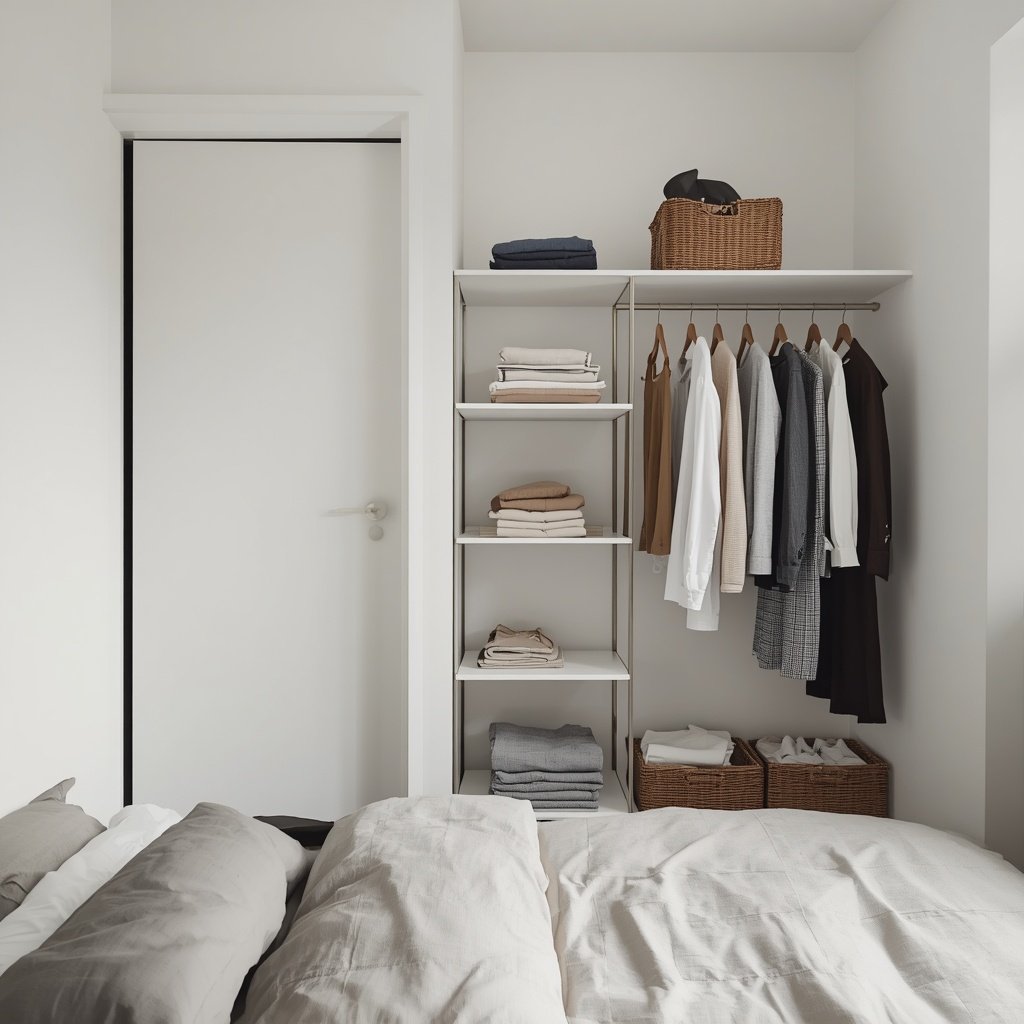
small bedroom without a closet can quickly become difficult to manage. Clothes may end up on chairs, shoes can collect on the floor, and everyday belongings can take over the limited space available.
The good news is that you do not need a traditional closet to create an organized bedroom. You can build an effective storage system by combining vertical space, under-bed storage, compact furniture, wall hooks, shelves, and simple daily habits.
The goal is not to fit as many belongings as possible into the room. The goal is to give everything a practical place while keeping the bedroom comfortable and easy to use.
These 15 ideas can help you organize a small bedroom without a built-in closet while making better use of the space you already have.
1. Declutter Before Adding Storage
The first step is not buying storage furniture. It is deciding what you actually need to store.
A small bedroom becomes difficult to organize when there are more belongings than the available space can comfortably handle. Adding boxes, shelves, or racks without removing unnecessary items can simply move the clutter from one place to another.
Sort Everything Into Four Groups
Go through your clothing, shoes, accessories, bedding, and other bedroom items.
Create four groups:
- Keep
- Donate
- Store elsewhere
- Discard
Be honest about items you have not used for a long time. If something is broken, uncomfortable, outdated, or no longer useful, it may not deserve valuable storage space.
Once unnecessary belongings are removed, organizing the remaining items becomes much easier.
2. Create a Dedicated Clothing Zone
Without a closet, clothing needs a clear home. Instead of allowing clothes to spread across the room, create one dedicated clothing zone.
A clothing rack, freestanding wardrobe, narrow shelving unit, or combination of shelves and hanging rails can work well.
Keep the Clothing Area Controlled
Do not use the clothing rack as a place to hang every item you own.
Keep frequently worn clothing accessible and move seasonal or rarely used pieces into less accessible storage.
A smaller, organized clothing collection can make an open rack look intentional instead of cluttered.
[PLACE IMAGE HERE]
3. Use the Space Under Your Bed
The space under your bed can function as hidden storage when there is no closet.
It is especially useful for belongings that you do not need every day.
What Should Go Under the Bed?
Consider storing:
- Seasonal clothing
- Extra bedding
- Shoes
- Travel bags
- Spare towels
- Less frequently used accessories
Use shallow containers that slide out easily. Labeling them can also save time when you need something later.
Avoid filling the entire area with random items. Under-bed storage works best when each container has a specific purpose.
4. Use Vertical Space Instead of More Floor Space
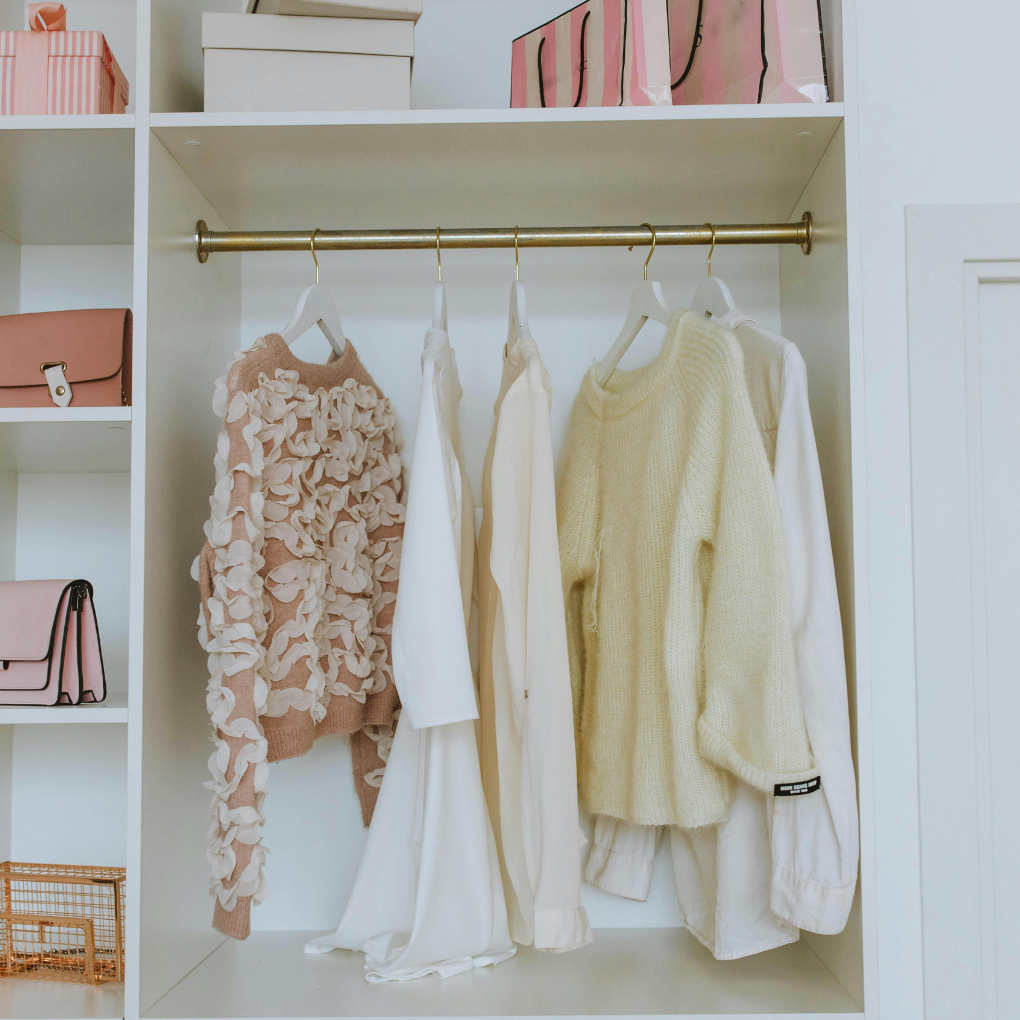
When a bedroom is small, the walls can become valuable storage areas.
Instead of adding another large piece of furniture, look for ways to use the unused height of the room.
Useful Vertical Storage Options
You can use:
- Floating shelves
- Wall-mounted rails
- Pegboards
- Hooks
- Tall shelving units
- Hanging organizers
Vertical storage is especially useful for items that are lightweight and frequently used.
Keep heavier belongings on stable, properly installed shelves and avoid placing anything unsafe above the bed.
5. Install Floating Shelves
Floating shelves can provide storage without using floor space.
They are useful for books, small baskets, accessories, plants, and decorative items.
Avoid Overloading Your Shelves
A shelf can become another source of visual clutter if every inch is filled.
Group similar items together and leave some empty space between objects. A combination of useful storage and open space usually looks cleaner than a completely full shelf.
If you rent your home, check the property rules before drilling into walls.
6. Use the Back of the Door
The back of your bedroom door is easy to overlook, but it can provide useful storage.
Items You Can Store Behind the Door
A suitable organizer can hold:
- Shoes
- Belts
- Bags
- Scarves
- Accessories
- Small personal items
Choose an organizer that does not prevent the door from opening and closing properly.
This is particularly useful because it adds storage without taking away valuable floor area.
7. Choose Furniture With Built-In Storage
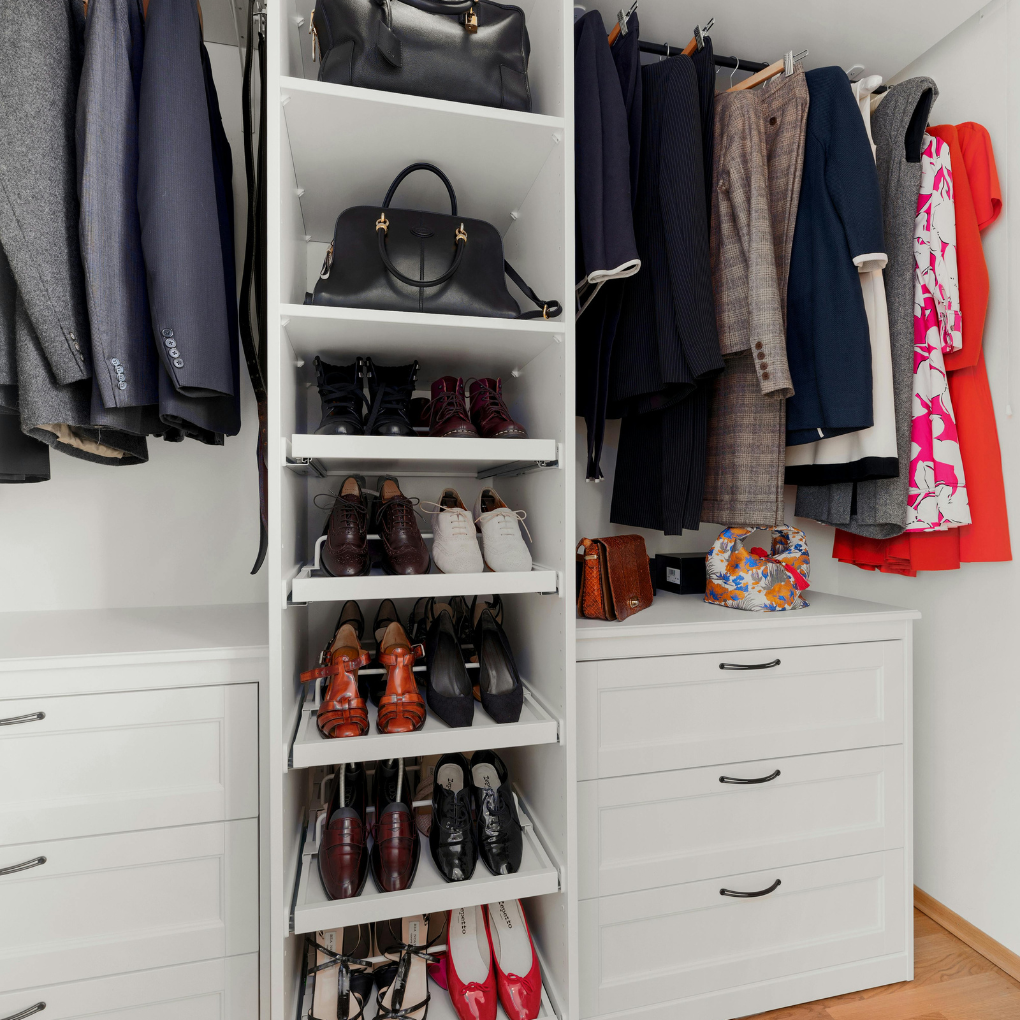
When space is limited, every piece of furniture should have a purpose.
Instead of choosing furniture based only on appearance, consider whether it can solve a storage problem too.
Consider Multi-Purpose Furniture
Useful options include:
- Beds with drawers
- Storage ottomans
- Benches with hidden compartments
- Nightstands with drawers
- Storage benches
- Compact desks with shelves
A piece of furniture that performs two jobs can reduce the number of separate items you need in the room.
8. Use a Tall and Narrow Storage Unit
If you need more storage but have very little floor space, consider a tall and narrow unit.
A vertical cabinet or shelving unit can provide considerably more storage than a short, wide piece with a similar footprint.
Choose Storage Based on Your Room Layout
Measure the available area before buying anything.
Check:
- Width
- Height
- Depth
- Door clearance
- Walking space
- Window access
A storage unit should improve the room rather than make movement difficult.
9. Organize Clothes by Frequency of Use
Not every item needs to be equally easy to reach.
Daily clothing should be stored where you can access it quickly. Seasonal and occasional clothing can be moved to higher shelves, under-bed containers, or other less accessible areas.
Create Simple Clothing Categories
Daily wear: Easy-to-reach drawers or hanging space.
Work or formal clothing: Keep hanging and protected from unnecessary wrinkles.
Seasonal clothing: Store separately when it is not needed.
Occasional clothing: Place in less accessible storage.
This system reduces the amount of searching and prevents your main storage area from becoming overcrowded.
10. Use Hooks for Items You Reach for Every Day
Hooks are simple, inexpensive, and useful in rooms with limited storage.
Create an Everyday Landing Zone
Use hooks for:
- Jackets
- Handbags
- Hats
- Robes
- Frequently used accessories
Place them where you naturally remove or pick up these items.
The important part is to avoid turning the hooks into a permanent pile. Give each hook a specific purpose.
11. Use Baskets and Boxes to Control Small Items
Small belongings can create a surprising amount of visual clutter.
Instead of spreading accessories across shelves, desks, or bedside tables, group them into containers.
Give Every Container a Category
For example:
- Electronics
- Accessories
- Hair products
- Small personal items
- Extra cables
- Travel items
Use labels if several containers look similar.
The purpose of containers is not to hide clutter. It is to make organized belongings easier to find and maintain.
12. Create a Proper Laundry System
Laundry can quickly become one of the biggest sources of bedroom clutter.
A small laundry basket gives dirty clothing a dedicated location instead of allowing it to collect on the floor, chair, or bed.
Choose a Space-Saving Laundry Basket
Look for a narrow or collapsible design that can fit:
- Beside a dresser
- Beside the bed
- Under a desk
- Inside a suitable storage area
Choose a location that is easy to access so you are more likely to use it consistently.
13. Use the Area Around Your Bed Carefully
The area around your bed should remain functional.
A common mistake in a small bedroom is placing storage furniture everywhere simply because space appears available.
Keep Your Main Walking Path Clear
Make sure you can comfortably:
- Get into bed
- Walk toward the door
- Open drawers
- Access your clothing
- Reach windows
- Clean the floor
A bedroom with slightly less storage but better movement will often feel more spacious and comfortable.
14. Avoid Buying Storage Before Measuring
Storage furniture can solve a problem, but the wrong furniture can create a new one.
Before purchasing anything, measure the space carefully.
Check These Measurements First
Measure:
- Available wall width
- Available floor area
- Ceiling height
- Door swing
- Window position
- Furniture clearance
- Walking space
Also consider how the furniture will enter the room. A large unit may technically fit the bedroom but be difficult to move through the doorway or stairs.
15. Create a Five-Minute Daily Reset
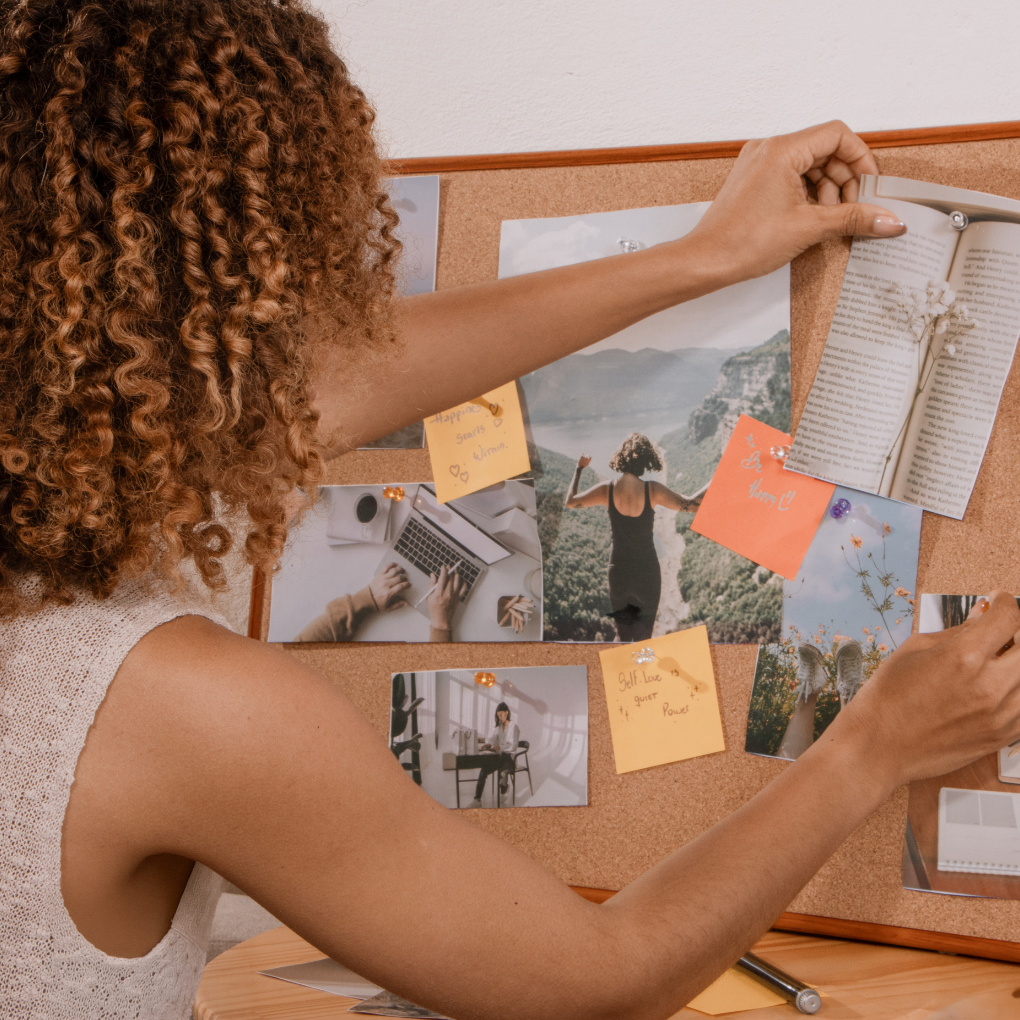
Even the best storage system will eventually fail if items are constantly left in random places.
A simple daily reset can prevent clutter from becoming overwhelming.
Follow This Five-Minute Routine
At the end of the day:
- Return clothing to its proper storage area.
- Put shoes away.
- Hang bags and jackets.
- Clear your bedside table.
- Return misplaced items.
- Put dirty clothing in the laundry basket.
- Remove anything that does not belong in the bedroom.
The purpose is not to spend a long time cleaning every day. It is to prevent small amounts of clutter from becoming a major problem.
Best Storage Solutions for a Small Bedroom Without a Closet
| Storage Solution | Best For | Floor Space |
|---|---|---|
| Under-bed storage | Seasonal clothing and bedding | Very low |
| Clothing rack | Everyday clothing | Low |
| Floating shelves | Books and accessories | None |
| Door organizer | Shoes and small items | None |
| Tall shelving | Multiple categories | Low |
| Drawer unit | Folded clothing | Medium |
| Storage ottoman | Blankets and small items | Low |
| Wall hooks | Bags and jackets | None |
The best solution is usually a combination rather than a single storage product.
For example, everyday clothing can stay on a rack, folded clothing can go into drawers, seasonal items can go under the bed, and accessories can use wall hooks or a door organizer.
How to Organize a Small Bedroom on a Limited Budget
You do not need to completely redesign your bedroom to improve its organization.
Start With What You Already Have
Before buying anything, look for unused opportunities.
You may already have:
- Space under the bed
- Empty wall space
- Unused corners
- Shelves that need reorganizing
- Drawers that are poorly arranged
- Space behind the door
Decluttering and rearranging existing furniture can sometimes make a noticeable difference without requiring a major purchase.
Buy Storage Only for a Specific Problem
If your shoes are the problem, solve the shoe-storage problem.
If clothing is the problem, improve clothing storage.
If accessories are scattered everywhere, create a small accessory zone.
Avoid buying random organizers simply because they look useful.
How to Keep an Open Clothing Rack Looking Organized
An open clothing rack can be practical, but it can also become visually overwhelming.
Use a Simple Clothing System
Arrange clothing by category or type.
For example:
Shirts → Jackets → Dresses → Trousers
You can also organize by frequency of use.
Keep the number of items on the rack under control. If the rack becomes difficult to browse, move seasonal or rarely worn clothing into hidden storage.
Matching hangers can also create a more consistent appearance, but the most important improvement is reducing unnecessary items.
Common Mistakes to Avoid
Adding Too Much Furniture
More furniture does not automatically mean more organization.
A room can become harder to use when storage pieces block walking paths or make the space feel crowded.
Keeping Everything
If you rarely use something, ask whether it deserves prime storage space.
Filling Every Shelf
Empty space is not wasted space. It can make the room feel calmer and make useful items easier to access.
Ignoring Vertical Space
If your floor is already full, look at your walls before adding another floor-standing unit.
Creating Complicated Systems
An organization system should be easy enough to maintain every day.
If putting something away requires several steps, you may stop using the system.
A 30-Minute Small Bedroom Reset
If your bedroom is currently cluttered, you do not need to organize everything at once.
First 10 Minutes — Remove Clutter
Pick up clothing, shoes, packaging, rubbish, and items that belong somewhere else.
Next 10 Minutes — Organize Clothing
Separate daily clothing, seasonal items, and clothing that needs to be stored elsewhere.
Final 10 Minutes — Fix the Storage Zones
Put belongings into their assigned locations.
Clear the floor, organize visible surfaces, and make sure your main walking path is open.
The room does not need to be perfect. The goal is to create a system that is easier to maintain.
Frequently Asked Questions
How do I organize a small bedroom without a closet?
Start by decluttering, then create separate storage zones for hanging clothing, folded clothing, shoes, accessories, and seasonal items. Use clothing racks, drawers, shelves, hooks, and under-bed storage according to your available space.
Where should I store clothes without a closet?
Use a combination of a clothing rack for frequently worn items, drawers for folded clothing, and under-bed or upper storage for seasonal and rarely used clothing.
How can I create more storage in a small bedroom?
Use vertical wall space, the area under the bed, the back of the door, unused corners, and multi-purpose furniture. These areas can add storage without requiring a large increase in floor furniture.
Is an open clothing rack a good replacement for a closet?
An open clothing rack can work well when you have a limited number of clothes and keep the rack organized. It works best when combined with drawers or hidden storage for folded and seasonal items.
How do I stop a small bedroom from becoming cluttered?
Give every frequently used item a permanent home and follow a short daily reset routine. Regularly remove items you no longer use so your storage system does not become overloaded.
What should I store under my bed?
Under-bed storage works well for seasonal clothing, spare bedding, shoes, travel bags, and other items that you do not need every day. Use containers that are easy to access and label them when necessary.